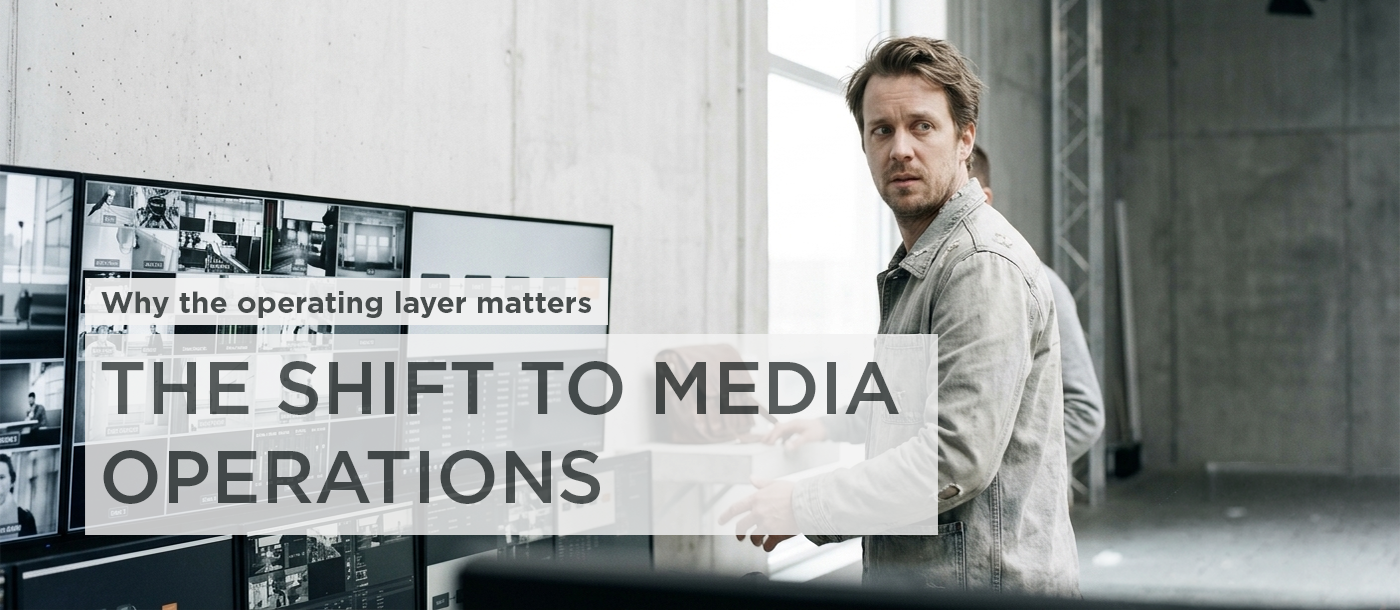
The shift to media operations
For years the job looked like plumbing. Move the asset from ingest to playout, get it from the edit to the archive, push the promo out in twelve formats to eight destinations, then do it all again tomorrow because a platform changed its delivery spec overnight. Much of that work has become reliable enough to be taken for granted.
What doesn’t run fine sits on top of it. Ask an operator what actually went wrong last quarter and the integration rarely comes up. What comes up is the promo that went out with the wrong end card and sat on a client’s platform for three days before their team flagged it. Or the transcription bill that doubled in a month because someone swapped an AI model upstream and nobody priced the change before it ran. As AI services enter these workflows, the same problem is about to matter in new ways. A model change upstream can alter cost, risk or output quality before the operations team knows anything has changed.
Neither of those is a plumbing failure. Every file moved exactly where it was told to go. The failure happened one layer up: nobody could see the problem, nobody owned the answer, and the cost arrived as an invoice instead of a warning.
That layer has a name. Media operations is the practice of making media workflows visible, accountable and controllable while they run. It asks whether a workflow is running the way the business needs it to run, and who owns the answer when it isn’t. It treats cost as something you know before the workflow executes, not something finance reconstructs six weeks later.
Most organizations have been buying plumbing to solve this. Another connector, another integration, another orchestration layer under the orchestration layer. The mechanics improve and the accountability does not.
Which is why the useful shift is altitude, not tooling. A supply chain view optimises how content moves through the pipeline, and it’s genuinely good at that. A media operations view stands above it and asks a different question: when this workflow produced the wrong result at 2am, how long until someone accountable knew?
A supply chain tells you how content moves. Media operations tells you whether the business outcome is under control.
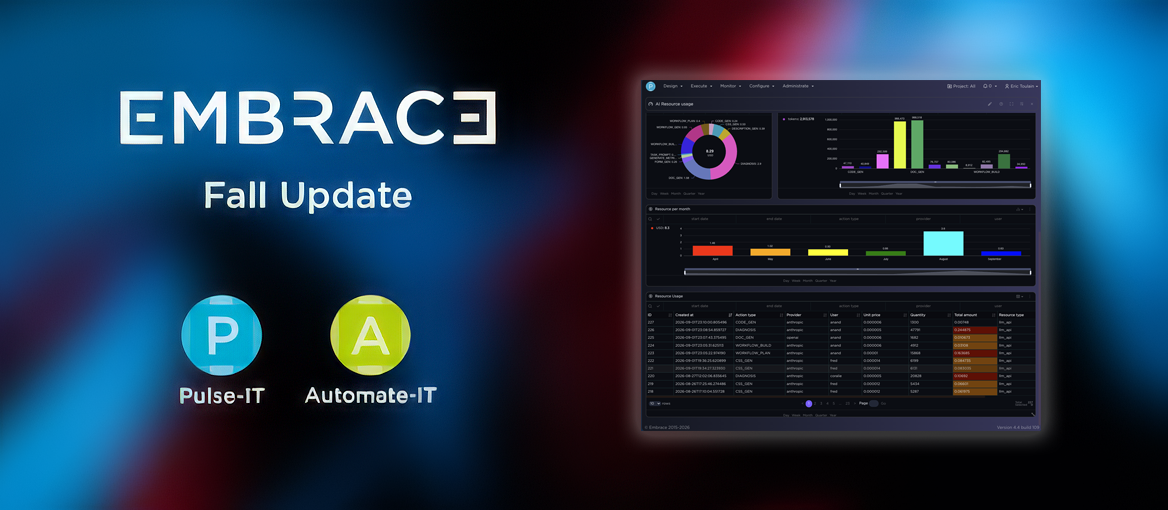
Everything Embrace builds sits at that altitude, the operating layer. Pulse-IT orchestrates operational workflows and brings their state, decisions and exceptions into view. Automate-IT turns complex versioning requirements into controlled production processes. Both are designed to keep execution and operational control in the same place, in front of the people answerable for the outcome, on their terms.
The supply chain is the flow of content. The operating layer is what runs it. And this distinction matters more than ever. Media companies are adding destinations, cloud services, specialist vendors and AI models faster than they are adding operational oversight. Every new component increases what can happen inside a workflow—and what someone needs to know while it is happening.
The next phase of the work is building that layer on top of the pipes you already own, not laying more pipe.
About Embrace
Embrace is the operating layer for media companies, connecting people, technology and processes since 2015. Pulse-IT and Automate-IT enable operations teams to orchestrate, automate and continuously improve complex media operations.
Our products are heavily used 24/7 by leading media groups such as Arte Studio, BCE, Be tv, CANAL+, Disney-ABC News, Euronews, Eurosport, Hearst Networks EMEA, Madison Square Garden Networks, Mediawan Thematics, M6, Mercedes-AMG, NBA, NFL Films, NHL, Omnicom Group, Orange, Red Bee Media, RTL Group, ProSiebenSat1, Sinclair, TF1, TV5MONDE, and Warner Bros. Discovery.
For more information, visit www.embrace.fr.